

Why Well-Made Local Farm Tools Last Longer
A hoe or fork looks simple, but farmers know the difference between a tool that bends in the first season and one that lasts for years. The difference is engineering: the right steel, the right heat treatment and a strong joint.
1. Steel selection
Soft mild steel is cheap and easy to shape, but it bends and wears quickly in stony soil. Tools that work the soil need a higher-carbon steel that can be hardened. At A-Z we choose steel grades for their job: harder for tines and blades, tougher for sockets and frames.
2. Heat treatment
Hardening and tempering give a working edge that resists wear, and a body that bends slightly under shock instead of snapping. A tool that is too hard breaks. A tool that is too soft bends. Controlled heat treatment gets the balance right.
3. Joints and welding
Most tools fail at the joint between the head and the socket. Full, clean welds by trained welders, with correct penetration, are much stronger than spot welds or rivets.
4. Design for local conditions
- Tine length and angle matched to Rwandan hillside soils
- Handles that fit locally available wood
- Anti-rust finish for the rainy seasons
Buying local
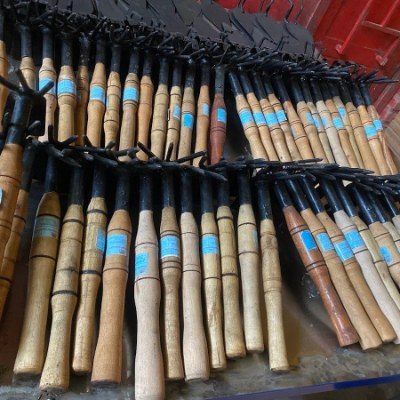
Locally made tools can be repaired and replaced quickly, and they are designed with feedback from local farmers. Buying them also creates jobs in Rwanda. A-Z Manufacturing produces hoes, garden forks and other hand tools, with bulk prices for cooperatives, NGOs and agro-dealers.

 Live Chat